
 ultimate-guide
Michigan Divorce Process: What to Expect
Table of Contents
- The Michigan Divorce Process at a Glance
- How to File for Divorce in Michigan
- Michigan Divorce Timeline: What Happens Next
- Frequently Asked Questions
Last Updated: October 5, 2026
The Michigan Divorce Process at a Glance
The Michigan divorce process involves filing a complaint, serving your spouse, exchanging financial information, and either settling or going to trial. Most cases resolve without court hearings, but timelines vary with complexity and whether both parties agree on key issues.
The Michigan divorce process requires meeting residency requirements, filing specific court forms, and following statutory waiting periods. Even straightforward divorces involve deadlines that must be handled correctly to protect your rights.
How to File for Divorce in Michigan
To start the Michigan divorce process, you must meet residency requirements and file a complaint in circuit court. You or your spouse must have lived in Michigan at least six months, and you file in the county where either of you resides.
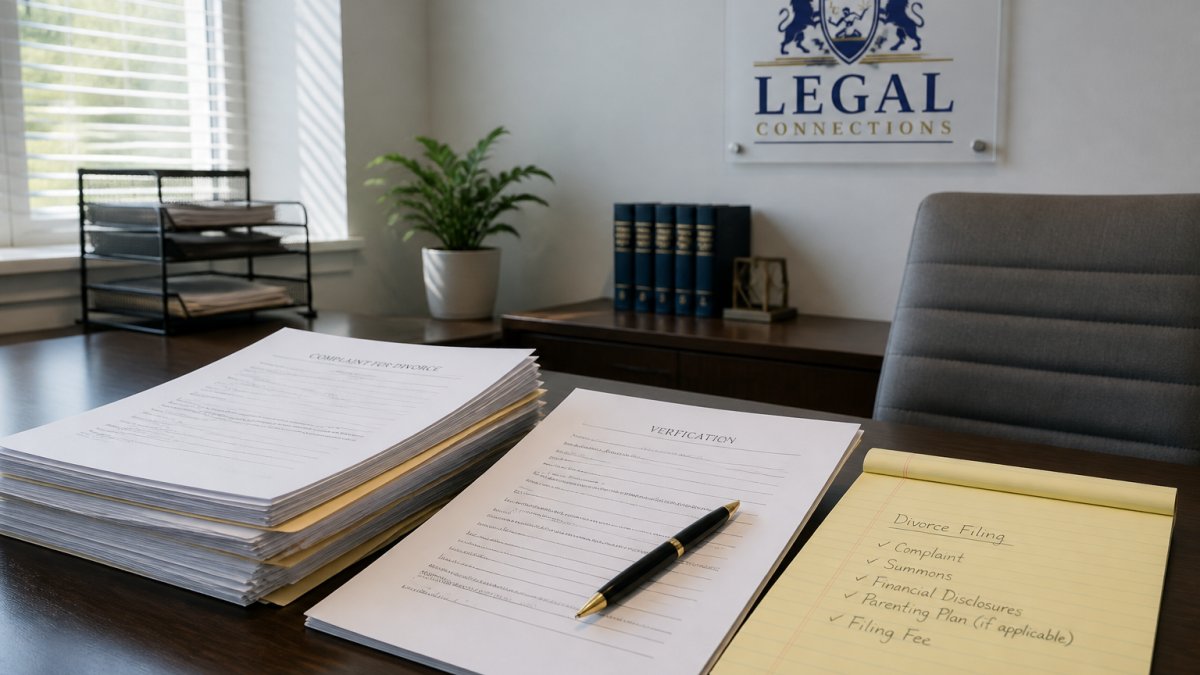
The filing process involves completing State Court Administrative Office (SCAO) forms and paying a filing fee. You'll need financial documents, including recent tax returns, pay stubs, bank statements, and information about marital property and debt, which both parties must exchange.
Once filed, you must serve your spouse with the complaint and summons by sheriff, process server, or certified mail. Your spouse has 21 days to respond; if they don't, you may proceed with a default judgment, though this is uncommon in contested matters.
Michigan Divorce Timeline: What Happens Next
After your spouse responds, the Michigan divorce process enters discovery, where both parties exchange financial documents. This phase typically takes two to four months, depending on how quickly each side provides documents and whether disputes arise. Establishing a clear picture of your assets during this exchange serves as the essential foundation for effective financial planning after divorce.
Many couples attempt mediation during this period. Court-ordered mediation is often required and can resolve disagreements about property division, child custody, parenting time, and support without litigation, usually within four to eight weeks.
If settlement succeeds, you'll draft an agreement covering property and debt division, child custody and parenting time, child support, and spousal support if applicable. Once signed, you submit it to the court, where the judge reviews it for compliance with Michigan law.
Schedule a Confidential Consultation →
If you cannot reach agreement, your case proceeds to trial. Pre-trial conferences typically occur 60 to 90 days before trial, and trial can take days or weeks depending on complexity. The judge then issues a final judgment on all contested issues.
Michigan law requires a 60-day waiting period from filing before a judgment can be entered, though this can be waived in limited circumstances. After judgment, either party has 21 days to appeal.
The entire Michigan divorce process typically takes six months to two years, depending on whether the case is contested, the complexity of assets and custody arrangements, and how quickly both sides move through each stage.
Frequently Asked Questions
How long does the Michigan divorce process typically take?
The timeline varies based on whether your divorce is uncontested or contested. An uncontested divorce where both spouses agree on all terms may be finalized within a few months. A contested divorce involving disputes over property, custody, or support can take significantly longer, sometimes a year or more. Court schedules, the complexity of your financial situation, and whether mediation is used all affect the timeline. Your attorney can provide a more specific estimate after reviewing your circumstances.
What documents do I need to gather before filing for divorce in Michigan?
You'll need financial disclosure documents, including recent tax returns, pay stubs, bank statements, investment account statements, and documentation of debts. If children are involved, gather records related to custody arrangements and childcare expenses. You'll also need your marriage certificate and identification. Michigan divorce papers and forms require detailed financial information, so having these documents organized before filing streamlines the process and helps your attorney prepare accurate paperwork.
Can mediation help resolve my Michigan divorce without going to court?
Yes. Michigan divorce mediation allows you and your spouse to work with a neutral third party to reach agreements on custody, support, property division, and other issues. Many divorces are resolved through mediation or settlement negotiations without a court hearing. Mediation can be faster and less adversarial than litigation. However, if you cannot reach agreement on key issues, the case proceeds to court. An attorney can advise whether mediation is appropriate for your situation and represent your interests throughout the process.
Navigating the Michigan divorce process involves multiple steps, deadlines, and decisions that affect your family's future. The right legal guidance makes the difference between protecting your interests and missing critical opportunities. Schedule a confidential consultation with Legal Connections PLLC to discuss your specific situation and develop a strategy tailored to your goals.